 Back
BackCategories

Growing partnerships to safeguard plants
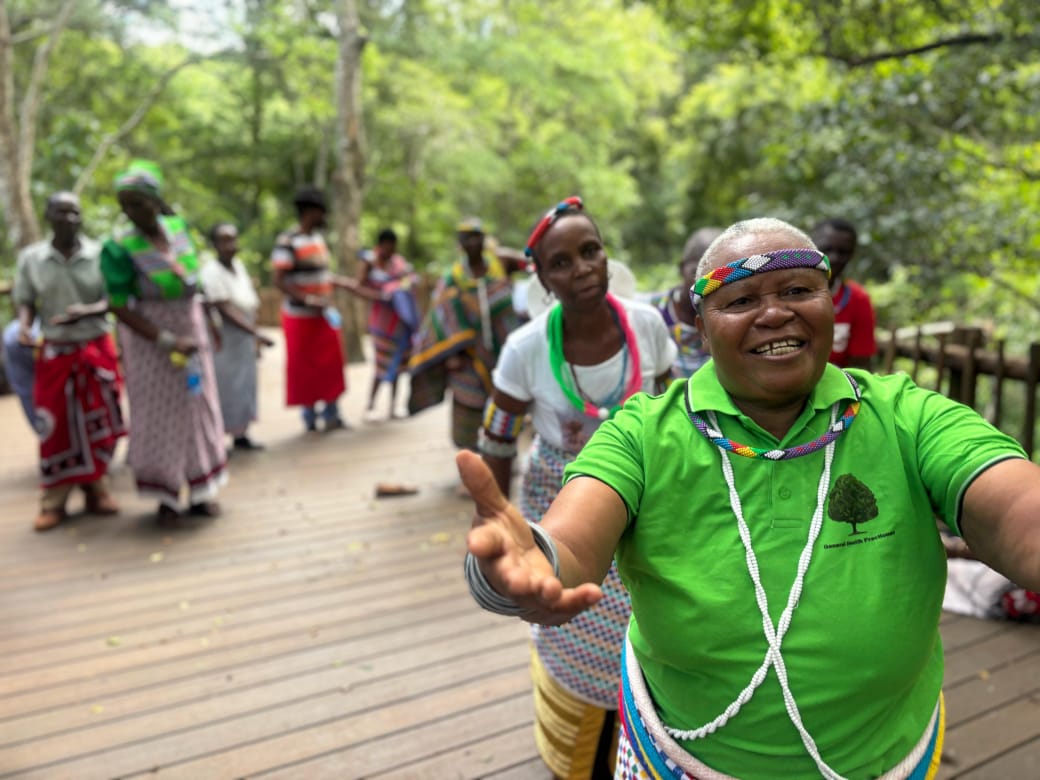
Mrs Ndiamande during a learning exchange with other Traditional Health Practitioners (THPs) from Limpopo. Credit - Jenny Botha.
One home, one garden: Cultivating partnerships to safeguard South African medicinal plants
Traditional medicine remains central to the well‑being of an estimated 60–70% of South Africa’s population, and is often used alongside allopathic (conventional) medicine. Many healing practices and remedies rely on medicinal plant species, drawing on knowledge passed down through generations.
Historically, harvesting was governed by spiritual and cultural practices and customary laws that protected both species and the ancestral knowledge associated with them. Seasonal restrictions, cultural and spiritual protocols, and the implementation of customary laws reduced threats of overharvesting, while compliance was enforced through fines and other penalties if these were breached.
Today, the high demand for these plants to sustain the needs of a larger, more urbanised population is intensifying the risk of biodiversity loss, together with stressors such as habitat degradation and transformation, climate change, and other human activities. This has led to 178 of South Africa’s indigenous medicinal plant species being listed on the IUCN Red List. Their loss not only erodes biodiversity, but also undermines a vital healthcare system that millions of people still depend on.
To address this longstanding conservation challenge, the Endangered Wildlife Trust (EWT) is partnering with Traditional Health Practitioners (THPs), traders, and harvesters to tackle some of the key root causes of threats to medicinal plants.
This strategy focuses on three pillars:
- Ensuring long‑term legal access to medicinal plants through cultivation where feasible.
- Safeguarding and improving the management of wild populations.
- Supporting communities, local leaders, and law enforcement to strengthen governance and wildlife controls.
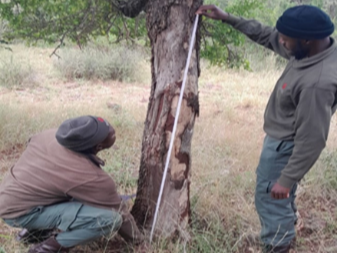
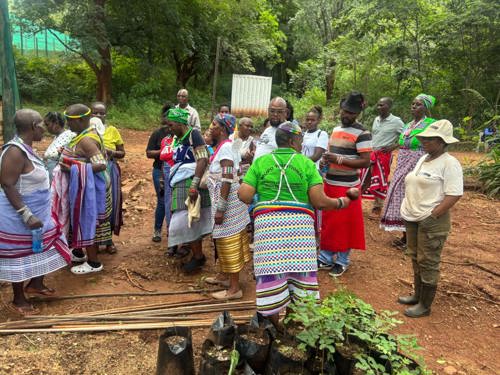 Traditional Health Practitioners identifying medicinal plant species for cultivation during a learning exchange. Credit - Ndivhuwu Khantshi.
Cultivation as a sustainable supply option
While many THPs prefer wild‑harvested materials, a significant number are willing to cultivate medicinal plants if spiritual and cultural protocols are observed.
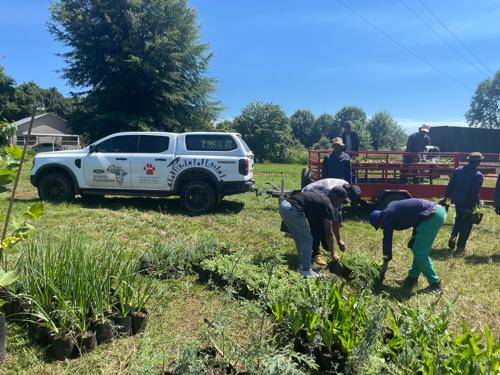
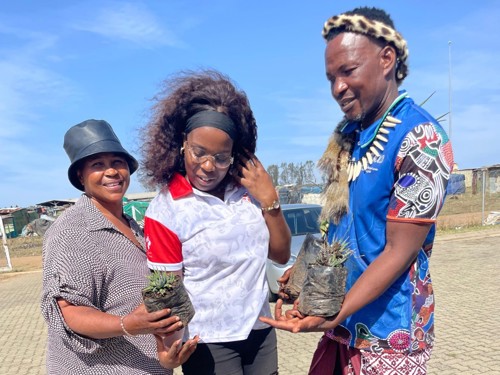
Following extensive engagement, and in partnership with the South African National Biodiversity Institute (SANBI), the EWT has delivered seven cultivation workshops for THPs, traders, and harvesters from Gauteng, Limpopo, and KwaZulu‑Natal. Approximately 320 THPs, traders, and harvesters have participated to date, and we receive frequent requests for training from additional groups.
Training covers site preparation, propagation, soil and water management, and wildlife legislation. Participants receive starter packs with tools and seedlings and join active support groups and learning exchanges. Additional seedlings are provided during mentorship visits.
Since most consumers are extremely financially constrained, it is critical that production costs are kept as low as possible and aligned to costs associated with harvesting. For this reason, we encourage the integration of medicinal plant cultivation into agroforestry systems rather than nursery establishment.
There are early signs of progress of the project, as expressed by one of the traders in Zulu: “Uma iphrojekthi iqhubeka ngalendlela eqhubeka ngayo manje, sizokwazi ukuvuna izitshalo zemithi ngokusimama ezivandeni zethu zasekhaya eminyakeni emihlanu ezayo.”
In English, this translates to: “If the project continues at the current pace, we will be able to sustainably harvest medicinal plants from our home gardens within the next five years.”
Protecting and managing wild populations
Alongside cultivation, we are assessing and strengthening the protection and management of selected wild plant populations. In a recent assessment, 12 species were assessed, of which four are listed as protected on the South African National Forestry Act (No. 84 of 1998). One species (Elaeodendron transvaalense) is also listed as Near Threatened in South Africa on the IUCN Red List. While there was encouraging evidence that some harvesters were attempting sustainable practices, many trees assessed had been extensively damaged or killed.
Strengthening governance and awareness
In the past, community leaders received support from conservation officials to regulate harvesting, but most state agencies are now severely under‑resourced and support is limited.
To promote social cohesion and strengthen support among local leaders, conservation authorities, and law enforcement, the EWT is collaborating with THPs, traders, harvesters, community leaders, and local police to co-develop approaches that enhance governance and improve enforcement efforts.
A recent workshop with police and community members in Limpopo highlighted the extent of wildlife offences occurring in an area of high conservation value, and the impacts these offences have on society. Many participants were unaware of wildlife and related legislation, reinforcing the need to further engage with communities on wildlife legislation.
Conclusion
Safeguarding medicinal plants requires a multipronged approach that includes understanding market dynamics, addressing habitat degradation and loss, and working in partnership with THPs, traders, harvesters, communities, and other key stakeholders. Securing these essential species will rely on long‑term, sustained conservation effort over time, and coordinated, cross‑organisational and cross‑sectoral collaboration.
Commitment from our THP, trader, and harvester partners is growing. At a recent training workshop in KwaZulu-Natal, Traditional Health Practitioners developed their own rallying call: “One home, one (medicinal plant) garden.”
This simple yet powerful slogan captures both the urgency and the shared responsibility needed to secure these culturally and economically important species.
Written by Jenny Botha, Phomelelo Malatji, and Lufuno Konanani. For more information on this Illegal Wildlife Trade Challenge Fund Main project IWT134, led by The Endangered Wildlife Trust, please click here.