 Back
BackCategories

Details of Round 11 projects revealed
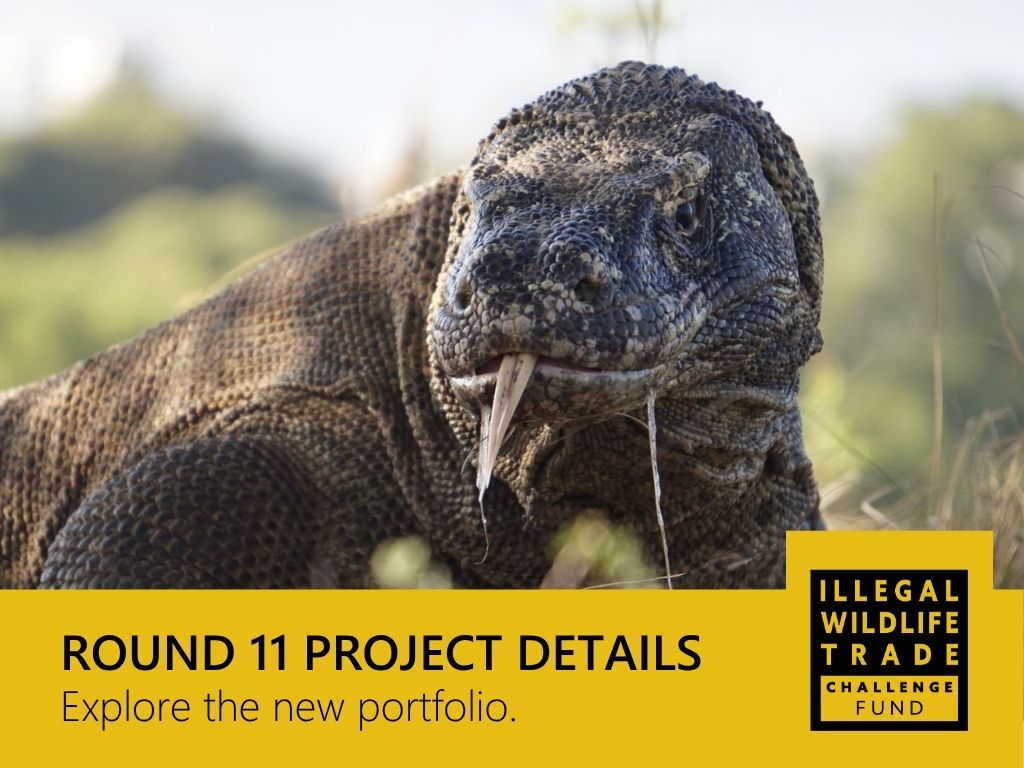
Wildlife belongs in the wild. Komodo dragon, an endemic species of East Nusa Tenggara, Indonesia - a reminder that nature thrives best when protected in its natural home. Credit – Friends of the Earth East Nusa Tenggara. IWT147.
Round 11 IWT Challenge Fund project details
Congratulations to the 14 Illegal Wildlife Trade (IWT) Challenge Fund projects that have been awarded funding under Round 11. These grants have been awarded to 1 Extra project, 6 Main projects, and 7 Evidence projects working across 16 countries.
Chair of the IWT Challenge Fund Advisory Group, John Scanlon, shared the following:
“This UK funding is providing invaluable support to eliminate the illegal trade in sharks, stop jaguar poaching, protect succulents, tackle corruption, and financial crimes, empower local communities, and break the cycle of relapsing into wildlife crime. These well-targeted initiatives are inextricably linked to global efforts to tackle climate change under the Paris Agreement and biodiversity loss under the Kunming-Montreal Global Biodiversity Framework."
From tiny succulents to timber trees, from seahorses to birds of prey, these projects will tackle the illegal trade of a wide range of wildlife and in doing so, reduce poverty in local communities.
Keep reading to learn more about projects being funded under each scheme.
IWT Challenge Fund Extra
The Extra scheme awards projects between £600,000 and £1.5 million to projects that last between 2 to 4 years. The projects expand activities that have already demonstrated success and impact at a smaller scale. Projects will do this through landscape or replication scaling, or delivering systems change that will have sustained impact beyond the project’s original scale.
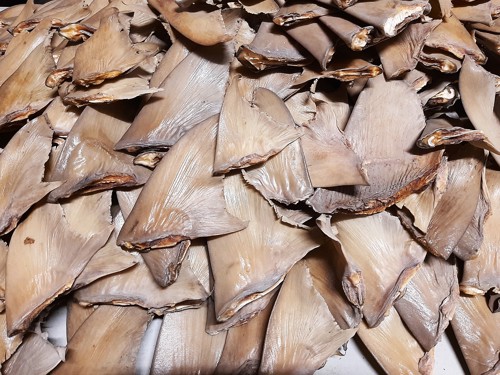
An Extra grant has been awarded to the project ‘Empowering East Africa to eliminate illegal shark trade’ (IWTEX008) led by the Wildlife Conservation Society under Round 11. This project is building on the successful Main project ‘Equipping southwest Indian Ocean countries to combat illegal shark trade’ (IWT116), delivered from 2022 to 2025, equipping Mozambique and Tanzania governments with improved human and staff capacity and technical knowledge to combat illegal shark and ray trade.
This Extra project will scale efforts in three ways. It will replicate activities in new countries, including Kenya and Madagascar. It will also build on completed work in Mozambique and Tanzania through landscape-scale expansion. In addition, it will strengthen management frameworks through systems-level change. Together, these approaches aim to create an environment that can better mitigate illegal trade, benefiting shark and ray populations and coastal communities, and supporting more sustainable, resilient livelihoods across the region.
Project Leader and Scientific Director for Shark Conservation at the Wildlife Conservation Society, Rhett Bennett, outlines the scale of the project:
“We are very pleased and incredibly appreciative of the funding offered by the IWT Challenge Fund, in support of our work on reducing illegal trade in sharks and rays in the Western Indian Ocean (WIO). The project aims to reduce illegal trade in shark and ray products from the WIO, by strengthening capacity to enforce new and existing fishery and trade measures, providing improved information on shark and ray catch and trade, providing alternative incomes and empowering coastal fishing communities to manage their own resources in a more sustainable manner, and supporting governments to strengthen regulatory frameworks and regulations for shark and ray catch and trade.”
IWT Challenge Fund Main
The Main scheme grants from £75,000 to £600,000 to projects that last between 1 to 3 years. These projects are expected to deliver strong results to tackle IWT and poverty reduction based on good evidence, test new and innovative IWT interventions to provide proof of concept at a smaller scale, and strongly demonstrate the potential to scale.
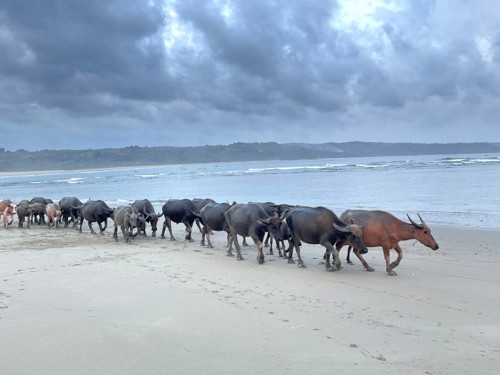
Round 11 Main projects cover diverse topics. They range from mainstreaming Malawi’s progress in tackling environment-related financial crime through bolstering law enforcement and corruption prevention efforts, to breaking the poverty-driven cycle of repeat wildlife crime in Zambia by developing a Wildlife Crime Recidivism Risk Framework and wildlife offender reintegration programme. From protecting heavily trafficked succulent species in South Africa by empowering communities to prevent illegal trade, to preventing jaguar poaching in Bolivia’s Maya-Forest by addressing retaliatory hunting linked to livestock predation through human-wildlife coexistence measures and agroforestry practices with local communities.
One of the Round 11 Main projects is ‘Making Indonesia’s new Conservation Law work against Illegal Wildlife Trading’ (IWT147) led by the Indonesian Center for Environmental Law. This project will support the development of implementing regulations and sentencing guidelines under Indonesia’s newly updated Conservation Law. Revised in 2024, after a decade of work from NGOs and the government, the Law presents new sanctions, fills gaps in prosecuting organised IWT, and secures compensation from offenders. This project will also train judges in the new law, and support ‘champion’ prosecutor teams to use the new provisions.
Phalita Gatra, Project Leader and Biodiversity Specialist at ICEL, shared the following:
“We are very excited to receive support from the IWT Challenge Fund for this project. Through this initiative, we hope to continue advancing improvements in Indonesia’s illegal wildlife trade policies, including promoting environmental recovery for the harm caused by IWT. We also look forward to strengthening collaboration among government institutions, civil society organizations, and other stakeholders, while continuing to support stronger understanding and implementation of IWT law enforcement among authorities, including prosecutors and judges.”
IWT Challenge Fund Evidence
The Evidence scheme provides from £20,000 to £100,000 to projects that last up to 2 years. These projects gather evidence to design innovative interventions to IWT. Applicants are encouraged to develop evidence projects into full interventions as part of follow-on applications to the IWT Challenge Fund.
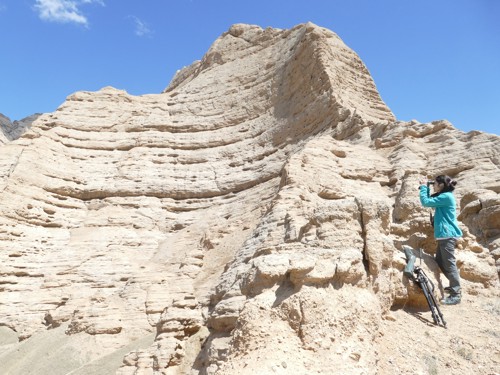
The portfolio of Evidence projects funded under Round 11 includes closing critical data gaps in Vietnam’s shark and ray trade to enable more effective, evidence-based conservation and sustainable fisheries management, to developing inclusive, community-led solutions that actively reduce and prevent lemur trafficking in Madagascar, to understanding the use of wildlife in traditional healing in South Africa to develop recommendations for legislative change and align conservation with traditional practice. All look to design an intervention where there is a gap in approaches.
Fauna & Flora International are leading the Round 11 Evidence project ‘Raptors in Central Asia: Trade and local use impact assessment’ (IWTE024) that is working to assess the impact of trade on falcon and golden eagle populations across Kyrgyzstan, Tajikistan, Kazakhstan, and Uzbekistan. It will combine targeted monitoring of falcon populations with data gathering on international trade chains and local use of raptors. Together, this will inform stronger conservation strategies, policy responses, and enforcement action across the region.
Project Leader and IWT Project Manager for Central Asia at Fauna & Flora, Kali (Akylai) Kabaeva, explains why this funding is needed now:
“Raptors in Central Asia historically have received little conservation attention, despite declining populations and a number of growing threats. Recognising this gap, Fauna & Flora, together with project partners, submitted a proposal with high hopes of securing support. When the funding decision was announced, we were thrilled to learn that our project had been selected, and we are excited to begin this important work in the coming months to strengthen national and regional conservation action for raptors in Central Asia.
This initiative will focus on understanding the impact of illegal trade and use on local populations of key raptor species in the region, including the Saker Falcon, Peregrine Falcon, and Golden Eagle. It will also explore the role of local communities in this complex issue. By gaining deeper insights into these matters, we aim to develop and implement more effective solutions to address the illegal trade in raptors across Central Asia and support their long-term survival, fostering the conditions in which these beautiful species can thrive.”
The full list of successful Round 11 IWT Challenge Fund projects can be found here.
A huge congratulations to all projects awarded under Round 11; the Biodiversity Challenge Funds team can’t wait to see your progress!
Please note that we will be sharing further information on the launch of new funding rounds in due course. Please follow our BCFs social media accounts and sign up to our mailing list to ensure you see any updates as soon as they are shared. Click here to sign up: IWT Challenge Fund Mailing List.